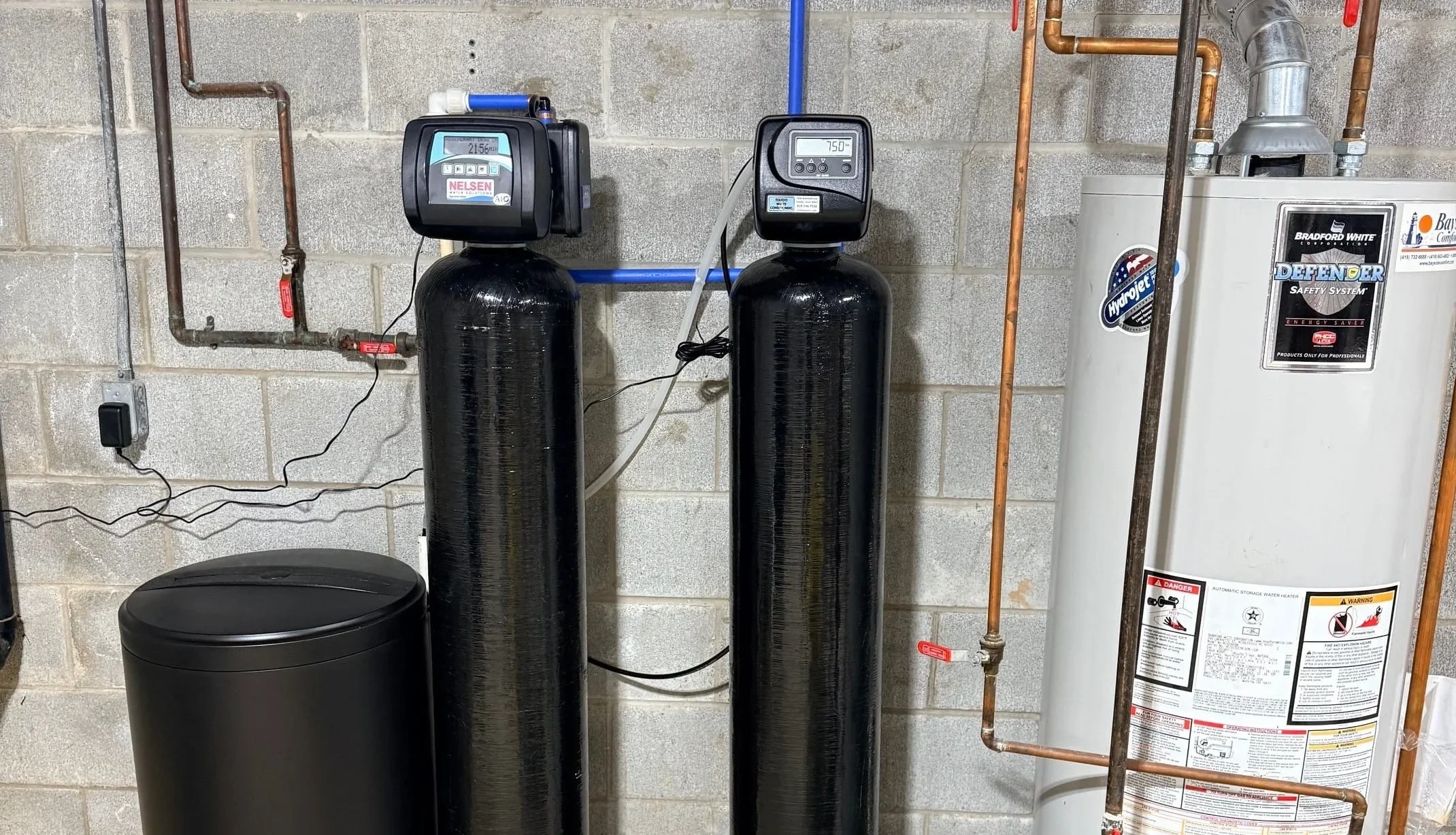
Whole house water filtration typically runs between $1,000 and $12,000, and where a given home lands depends entirely on what its water needs. At the low end, around $1,000, is a single filter on city water to take out chlorine. At the high end, closer to $12,000, is a well system that removes hardness and sulfur along with a dedicated drinking-water system. Most homes fall somewhere in between, because the price is driven by the problems in the water and the layout of the house, not by a flat product sticker. That is why an honest number comes from a water test and a look at the plumbing, not from a figure quoted over the phone.
After years of quoting these systems across the region, we can tell you the homes that end up happy are the ones that got a real number tied to their real water, and the ones that feel burned are almost always the ones who were sold a price before anyone tested anything.
What Most Homeowners Get Wrong
The common assumption is that whole house filtration has a set price, one number you can get over the phone and compare like a flat product. It is an understandable expectation, because that is how most purchases work.
Water treatment does not, because the cost is a function of the problem. A home that only needs chlorine taken out of city water is a fraction of the cost of a well home fighting iron, sulfur, and hardness at once. A quote given before the water is tested is a guess, and guesses tend to drift, the number climbs once the truth shows up, or the system is undersized to hit a price and fails to do the job. The realistic way to think about cost is as a range that narrows once someone actually sees your water and your plumbing.
What Whole House Water Filtration Actually Costs
Across the category, whole house treatment equipment generally ranges from about $1,000 to $12,000. Those figures describe the price reality of the trade, not any one company’s quote sheet, and the spread is wide for a reason.
The low end, near $1,000, is a simple case: a single filter on municipal water to remove chlorine and improve taste and odor. As problems stack up, so does the equipment. Add hardness and you are into softening. Add a well with iron or the rotten-egg smell of hydrogen sulfide and you are into oxidation and specialty filtration. Layer a drinking-water reverse osmosis system on top for the kitchen tap and the number climbs again. A well home that needs hardness removal, sulfur treatment, and a drinking-water system together is what sits near the high end, around $12,000. This is exactly why understanding what whole house water filtration actually is, a train of stages rather than one box, is the key to understanding its price. For the drinking-water piece specifically, how whole house filtration compares to reverse osmosis explains where that added cost goes.
What Drives the Price Up or Down
Within that range, a handful of variables move the number. The scope of the problem is the biggest one: softening only, versus iron or sulfur removal, versus a reverse osmosis system for drinking water, each adds equipment. The size of the equipment and the amount of it follow from the water test and the size of the household.
The house itself matters just as much. How far the equipment sits from the main water line, how far it sits from a drain, and how much pipe has to be run to reach the install location all affect labor and materials. A tight, close install costs less than one that requires long runs and rework of existing plumbing. None of these are add-ons invented to pad a bill, they are the real physical variables of putting the right system into a specific home, which is why a walkthrough is part of an accurate quote and why choosing the right system in the first place, covered in how to choose a whole house water filter, affects the total.
What Happens When You Get This Wrong
Cost mistakes usually come from buying on price instead of on the water. Size a system down to hit a number and it cuts water pressure and cannot filter thoroughly, so you pay again to fix it. Size it up beyond what the water needs and you pay for capacity that does nothing, and an oversized filter can even channel water straight through the media untreated. Buy a cheap unit to save money and, if it is one of the disposable big-box or online units, it cannot be repaired or sourced for parts, so it becomes a throwaway in a couple of years.
We have been called out plenty of times to pull equipment that was wrong from the start and redo it correctly, and that always costs the homeowner more than doing it right once. The cheapest system is rarely the one with the lowest sticker, it is the one sized and built for the water so it lasts.
Why How a Contractor Quotes Matters
Most quoting in this trade happens two ways. Some companies hand out a price over the phone or a flat package before anyone has seen the water, and some quote high on purpose and let the number float. Both put the homeowner at risk of paying for the wrong thing.
The way a quote should work is simple: test the water, look at the plumbing, then price the system that solves what the test found. We do a free in-home water analysis for exactly this reason, it tells us what is actually in the water and lets us look at the plumbing situation, so the number we give is tied to the home in front of us rather than a guess. That approach also means we are not incentivized to oversell, because the recommendation follows the test, not a package we are trying to move. A quote built that way is one you can trust, and it is the difference between a fair price and a number that changes on you.
The Bottom Line
Whole house water filtration costs what your water requires, somewhere in the $1,000 to $12,000 range, and the only way to turn that range into a real number is to test the water and look at the plumbing first. Treat any price quoted before that as a guess. If you want an accurate figure for a whole house water filtration installation, start with a free in-home water analysis, and if you are still deciding who to trust with the work, how to choose a water filtration company is worth a read. No pressure, just a clear number tied to your actual water.