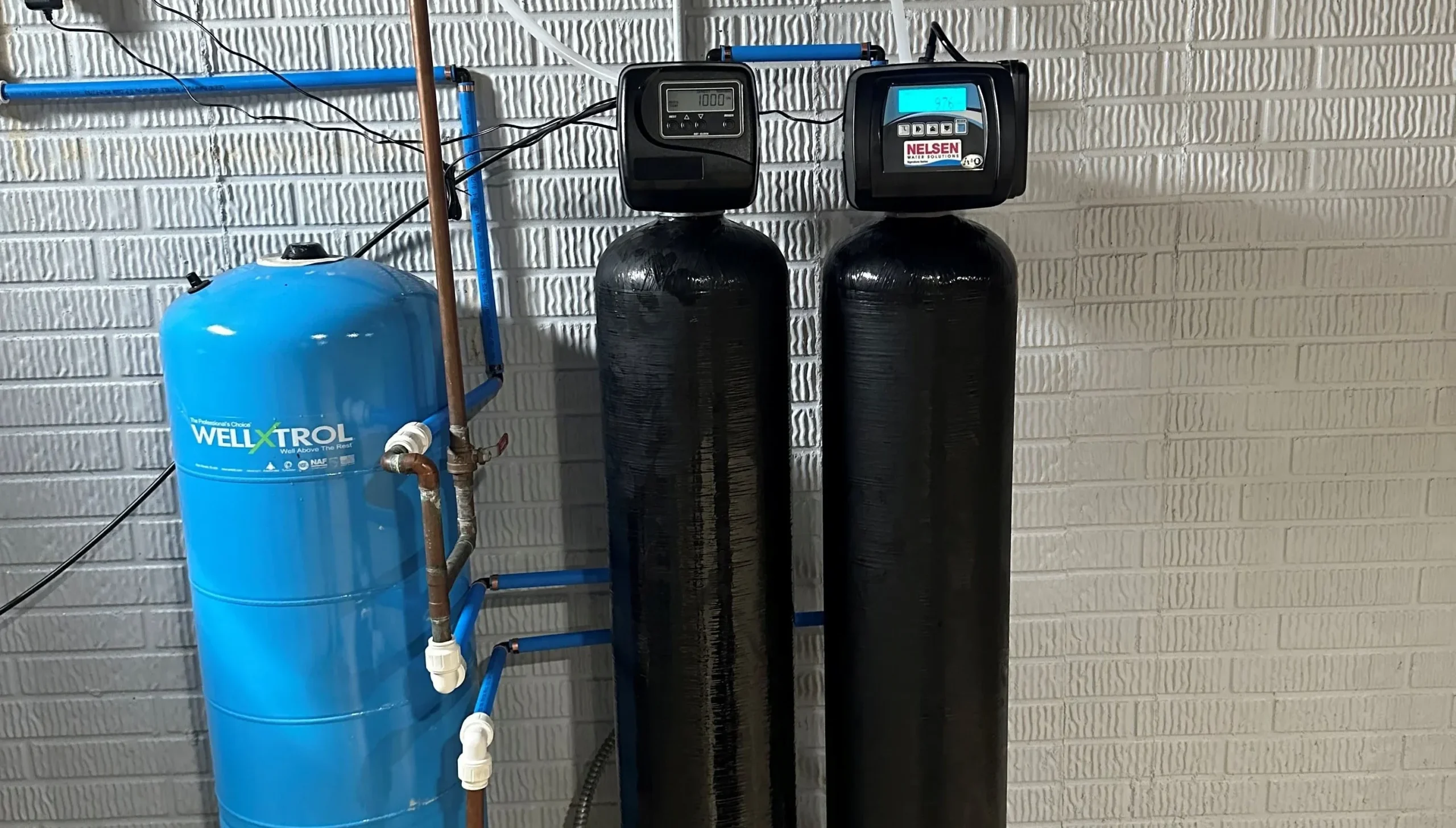
Choosing a whole house water filter starts with one step almost everyone skips: testing the water. The right filter is the one matched to the specific contaminants in your home’s supply, so the choice is really a sequence of choices, carbon for chlorine and taste and odor, sediment filtration for dirt and particles, specialty stages for iron or the rotten-egg smell of hydrogen sulfide, and an under-sink reverse osmosis unit for drinking water. On top of matching the stages, the filter has to be sized to your household and built to be serviced rather than thrown away. A system chosen off a test, sized to the home, and made of serviceable parts is the one that actually solves the problem and lasts. In Northwest Ohio, where well water often carries heavy iron and sulfur, that testing is what keeps you from buying the wrong thing.
After years of installing these systems across the region, we can tell you the homeowners who choose well are not the ones who bought the most expensive filter, they are the ones who found out what was in their water first.
What Most Homeowners Get Wrong
The usual approach is to shop for a whole house filter the way you would shop for an appliance, compare a few units, read some reviews, pick the one with the best rating. It feels responsible, but it puts the cart before the horse.
A filter is only “the best” relative to a specific water problem. A carbon system that earns great reviews for fixing chlorine taste will do nothing for hardness or iron staining, and a unit that fits one home can be the wrong choice for another entirely. City water in this region is hard, so even a home on municipal water usually needs softening, not a filter alone. The reviews and the ratings are describing performance against problems that may not be yours. The mistake is choosing the product before identifying the problem, which is backwards. The right order is water first, filter second.
How to Match a Filter to Your Water
Start with a water test. It tells you what is actually present, chlorine, iron, hydrogen sulfide, hardness, sediment, PFAS, or some mix, and at what levels. Every choice after that flows from the results.
Then match stages to problems. Chlorine and the taste and odor that ride with it are handled by carbon. Dirt, rust, and particles are handled by sediment filtration. Iron and the rotten-egg smell of hydrogen sulfide are handled by oxidation, turning them into particles a filter can trap, and here the method matters: we use ozone, peroxide, or chlorine rather than air injection, because air-injection systems pull bacteria, viruses, and mold from the surrounding air into the water. Hardness, the calcium and magnesium behind scale, is a softener’s job, a separate step, and because city water here is hard, softening is a normal part of a city-water build alongside filtration rather than an optional extra. For the drinking tap, an under-sink reverse osmosis system removes the large majority of dissolved contaminants, including PFAS, and if you are weighing that against whole-house treatment, whole house filtration versus reverse osmosis lays out the choice. Understanding the full picture of what whole house water filtration is makes matching the stages much easier.
The Factors That Decide Which System Fits
Beyond matching stages, three factors decide the right system. The first is your water source, municipal or well, since each carries a different problem list and a different treatment order. The second is sizing. A filter has to be matched to how much water the household uses. Undersize it and it cuts pressure and cannot filter thoroughly, oversize it and water can channel straight through the media without being treated, so bigger is not automatically better.
The third factor is build quality, and this is the one buyers most often overlook. A serviceable, repairable system with parts that can be sourced is worth more over its life than a cheap unit that cannot be fixed and gets thrown away when it fails. Component quality, whether the system is designed to be maintained and repaired, is a real selection criterion, not a detail. The cost of these systems tracks with these same factors, which is covered in how much whole house water filtration costs.
What Happens When You Get This Wrong
Choose the wrong filter and you feel it fast. A system aimed at the wrong contaminant leaves the real problem in place, the smell or the staining or the taste never goes away, and you have paid for filtration that does not filter what you have. A wrongly sized unit shows up as weak pressure or water that slips through undertreated.
The build-quality mistake is slower but expensive. A disposable big-box or online unit that cannot be repaired or sourced for parts becomes a throwaway in a couple of years, so the “cheaper” filter costs more across its life. We have replaced plenty of units that were the wrong choice from day one, and the pattern is always the same: the system was picked before the water was understood. Getting the choice right the first time is what avoids buying twice.
Why How a Contractor Matches the Filter to Your Water Matters
Most product recommendations in this trade come one of two ways. Some sellers push whatever unit they carry, the same model to every home. Others lead with a brand or a spec sheet before anyone has looked at the water.
A contractor who does this right works in the other direction. We test the water first, then specify the stages that solve what the test found, then size the system to the household and the plumbing. That means the recommendation changes from home to home, because the water does, and it means we are not steering you toward a single unit regardless of fit. It also means we favor equipment that can be serviced and repaired over disposable units, because the goal is a system that lasts, not one sold cheap and replaced often. When the filter is matched to your water instead of pulled off a shelf, you end up with the system your home actually needs.
The Bottom Line
Choosing a whole house water filter comes down to matching the right stages to your actual water, sizing them to your home, and picking equipment built to be serviced instead of thrown away, and none of that is possible until the water is tested. Shop the problem, not the product. A professional whole house water filtration system is built from exactly that: your water test, the right stages, and equipment made to last. The place to start is a free in-home water analysis that shows you exactly what is in your water, and if you are also vetting who should install it, how to choose a water filtration company covers that side of the decision.
Frequently Asked Questions
There is no single best filter, only the best filter for your water. The right system is the one matched to the contaminants your water test finds, sized to your household, and built to be serviced. A carbon system that is ideal for one home can be the wrong choice for a well home entirely.