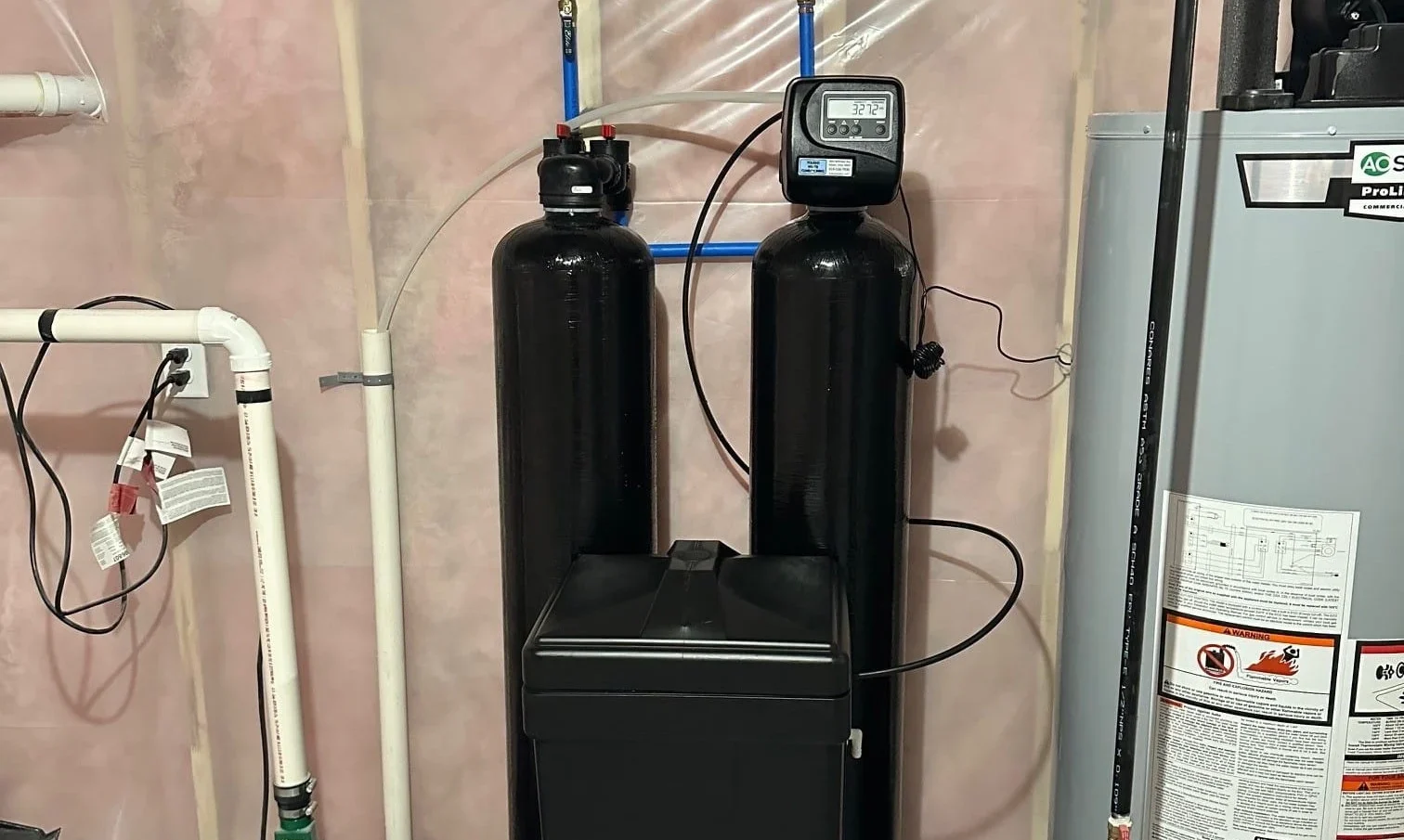
Whole house water filtration and reverse osmosis are not competitors, they solve different problems and most homes benefit from both. Whole house filtration treats every drop entering the home at one point, so all the taps, showers, and appliances get water with the chlorine, sediment, iron, or sulfur removed. Reverse osmosis is a point-of-use system, usually under the kitchen sink, that pushes water through a very tight membrane to remove the large majority of dissolved contaminants, including PFAS, for drinking and cooking. Whole house treatment protects the whole home and its plumbing, reverse osmosis delivers the highest-purity water at the one tap you drink from. The right answer for most homes is not one or the other, it is whole house filtration for the house and reverse osmosis for the drinking water. Which stages you need on each side comes down to what your water test finds.
After years of installing both across the region, we can tell you the “which one” question almost always resolves to “both, in the right roles,” once we see what the water actually contains.
What Most Homeowners Get Wrong
The common framing is that this is a versus decision, that you pick whole house filtration or reverse osmosis and the better one wins. Marketing reinforces it, each is sold as the complete answer.
They are not interchangeable, so treating it as either-or leads to the wrong setup. Choose only whole house filtration and your drinking water may still carry dissolved contaminants that a point-of-entry system is not built to remove. Choose only reverse osmosis and every tap except the one under the sink is still running untreated water, and your plumbing and appliances get no protection. The reason the versus framing persists is that it is a simpler story to sell than “here is how they work together.” The useful question is not which one, it is what each one is for.
How Whole House Filtration and Reverse Osmosis Differ
The clearest way to see it is by where each one sits and what each one does. Whole house filtration is point-of-entry, installed where the water line comes into the home, so it treats all the water. Its stages, carbon for chlorine and taste and odor, sediment filtration for particles, and specialty stages for iron or the rotten-egg smell of hydrogen sulfide, handle the problems that affect the whole house: how the water tastes and smells, staining on fixtures and laundry, and protection for plumbing and appliances. It reduces PFAS and volatile organic compounds through its filtration stages.
Reverse osmosis is point-of-use, almost always under the kitchen sink. It forces water through a membrane so tight that it removes the large majority of dissolved contaminants, including PFAS, at very high rates, which is why it is the most effective residential answer for drinking and cooking water. What it does not do is treat the rest of the house. So the two are complementary: whole house filtration handles the home-wide problems, and reverse osmosis gives you the highest-purity water at the tap you actually drink from, with the option to add minerals back to that water. If you are still getting oriented on the point-of-entry side, what whole house water filtration is covers it, and how to choose a whole house water filter covers matching those stages to your water.
Which One Your Home Needs (or Both)
For most homes the honest answer is both, in their proper roles: whole house filtration sized to the home’s water, plus an under-sink reverse osmosis system for drinking and cooking. But the specifics depend on the water. A city home whose main complaint is chlorine taste might start with carbon filtration at the point of entry and add reverse osmosis for drinking water. A well home dealing with iron, sulfur, and hardness needs a fuller point-of-entry train, and reverse osmosis still earns its place at the kitchen tap for the cleanest drinking water.
The deciding factors are the same ones that drive every choice in this category: your water source, what the test finds, and how your home is plumbed. That is why the “which system” question is answered by a water test, not by a rule of thumb, and why sizing each side correctly matters as much as choosing it. There is also a dependency worth knowing: reverse osmosis relies on the water reaching it being properly pre-treated. On well water especially, an RO fed by untreated water plugs and fails early, so the whole-house softening and filtration ahead of it are often what keep the RO working, which means the two do not just complement each other, they can depend on each other. The cost of running both is not simply additive either, which is worth understanding in how much whole house water filtration costs.
What Happens When You Get This Wrong
Getting the roles wrong leaves a gap. Rely on whole house filtration alone and expect bottled-water purity at the kitchen tap and you may be disappointed, because a point-of-entry system is not built to strip dissolved contaminants the way a membrane does. Rely on reverse osmosis alone and the rest of the home keeps running untreated water, so the smell, the staining, or the scale never gets addressed and the plumbing gets no protection.
The other failure is treating either system as one-size. An oversized or undersized point-of-entry system either wastes money or chokes pressure, and a reverse osmosis unit still has to be matched to the household and maintained. We see homes that bought one side of this and assumed it covered everything, then had to add the other later. Planning the two together from the start, around the water test, avoids paying twice.
Why How a Contractor Decides Between Them Matters
Plenty of sellers approach this with a default answer already loaded, they sell one system and frame it as the complete solution regardless of the home. That is how a homeowner ends up with half a setup.
A contractor who does this right decides the mix from the water, not from a catalog. We test the water first, then decide what belongs at the point of entry and what belongs at the drinking tap, and size each to the home. Sometimes that is a full point-of-entry train plus reverse osmosis, sometimes it is a lighter point-of-entry setup with reverse osmosis for drinking, and the difference is dictated by what the test shows and how the house is plumbed. The point is that the recommendation follows the water, so you get the combination your home needs instead of whichever single system was easiest to sell. If you are also weighing who should do the work, how to choose a water filtration company covers that.
The Bottom Line
Whole house water filtration versus reverse osmosis is the wrong question, because they do different jobs and most homes want both: filtration for the whole house, reverse osmosis for the drinking tap. The right mix, and the right size for each, comes from what your water test finds and how your home is plumbed, not from picking a winner. A complete whole-house water filtration setup usually pairs both. If you want to know which combination your home actually needs, start with a free in-home water analysis, and let the water decide.