Table of Contents
- The water heater gets blamed first
- What the rotten egg smell actually is
- What Makes a Sulfur Filter the Right One
- What happens when you get this wrong
- Why how a contractor treats sulfur matters
- The bottom line
- Frequently asked questions
Direct Answer
Hydrogen sulfide. It is one of the most recognizable well water problems in this region and it is treated with a dedicated sulfur filtration stage, installed after sediment and before the softener. If the smell is only at the hot tap it is worth checking the water heater, but on a well the usual cause is the water itself.
Key Takeaways
- A rotten egg smell on well water is hydrogen sulfide, a dissolved gas, and it is treated by oxidation, which turns that gas into particles a filter can catch rather than by filtration alone, which means turning the dissolved gas into particles a filter can catch.
- If the smell is only on the hot side, it is the water heater and not the water supply.
- The oxidizer matters. Air injection draws surrounding air into the water; we use ozone, peroxide or chlorine.
- Sulfur treatment sits ahead of softening, with iron, never after it.
- Masking the smell at one tap is not treatment. Source treatment is what makes it gone everywhere.
We get called out for the rotten egg smell more than any other single complaint in the townships around Toledo, and a meaningful share of the time the answer turns out to be the water heater rather than the well.
The Water Heater Gets Blamed First
The first suspect is always the water heater. Sometimes it is, and the tell is that the smell appears only on the hot side. On a well, the more common cause is hydrogen sulfide arriving in the water, in which case it is present at every tap.
The second is that a softener will handle it. It will not. Sulfur needs its own filtration stage, and running it through a softener does nothing for the smell while adding load the softener was not designed for.
The third is that it comes and goes for no reason, so it cannot really be treated. It does come and go, because concentrations shift with the seasons as the water table moves. That is a reason to size the treatment to the range rather than to one reading, not a reason to live with it.
What the Rotten Egg Smell Actually Is
Hydrogen sulfide, a dissolved gas that wells in this region commonly carry. Northwest Ohio and Southeast Michigan are known for heavy sulfur alongside heavy iron, and the two frequently appear together on the same well.
The smell is the symptom people react to, and it is a good symptom because it is detectable at very low concentrations. That means it is noticed early, before it has done anything.
What it does do, given time, is corrode. Hydrogen sulfide is hard on the equipment it passes through, and a water heater is often the first thing in the house to show it. Treated water protects investments most homeowners never connect to their water until something fails.
The important part is that the smell is the signal and not the problem. Masking it or chasing it at one fixture leaves the cause in place.
Removal works by oxidation. The dissolved gas is turned into particles a filter can trap, which means a sulfur stage is a chemical step followed by a physical one rather than something that strains the smell out.
And how that oxidation is done separates one company from another. Some companies oxidize by injecting air. We do not. Air injection draws whatever is floating in the surrounding air into the water, bacteria, viruses and mold included, and in our experience those tanks end up growing bacteria of their own. We use ozone, peroxide or chlorine.
What Makes a Sulfur Filter the Right One
There is no single best sulfur filter, because the phrase describes a ranking and sulfur treatment is a match to a concentration that moves.
It is sized to the range your water shows, not one reading. Concentrations shift seasonally, and a stage sized to a spring low is overwhelmed by late summer.
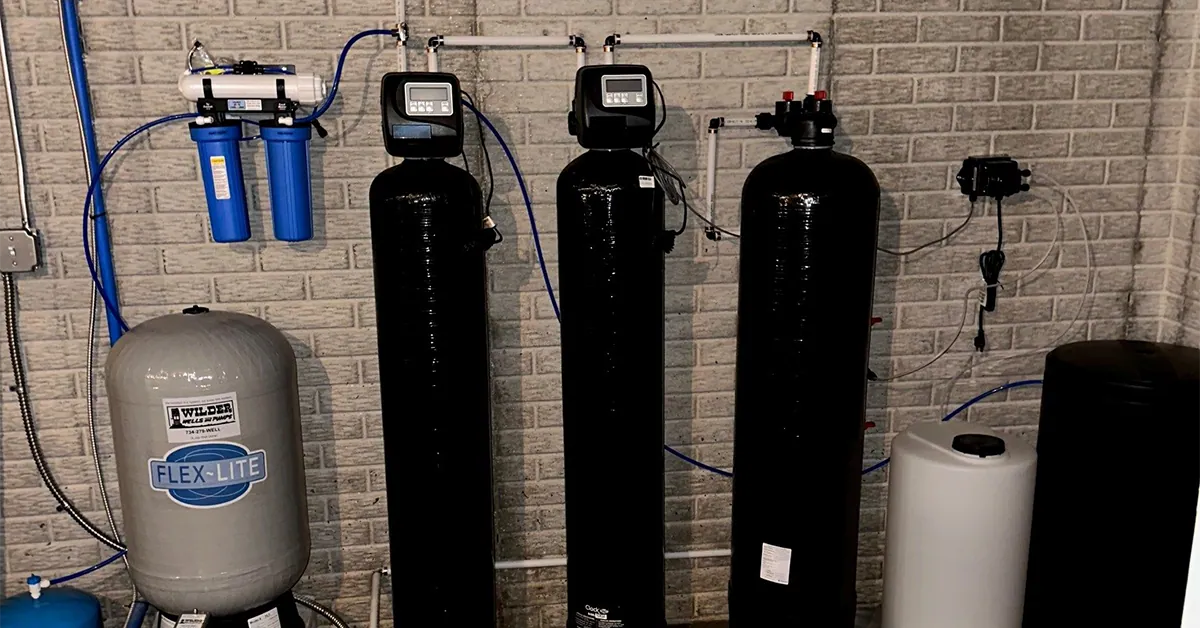
It sits after sediment and before the softener. Iron and sulfur precede softening. They are not added at the end.
It accounts for iron if iron is also present, which on wells here it often is. The two are treated as a train rather than as separate purchases.
And the oxidizer is part of the specification. Ozone, peroxide or chlorine, never air injection, for the reason given above.
Its maintenance interval matches the load, which on sulfur and iron water sits at the short end of the monthly-to-six-month range.
And it is serviceable by the company that installed it, because a whole house system on shifting water needs adjusting rather than just installing.
What does not make a system the right one is a treatment that knocks the smell down for a few weeks and then lets it creep back, which leaves the homeowner exactly where they started.
What Happens When You Get This Wrong
The water heater gets blamed and replaced. The smell returns on the new one, because the cause was never in the heater.
A softener is installed and nothing changes. The homeowner concludes the water cannot be fixed, when what happened is that the wrong stage was bought.
A treatment is undersized to a single reading and works until the season turns. The smell comes back and the equipment gets blamed rather than the sizing.
Or the smell is treated and the iron is not. On wells that carry both, handling one leaves the other running through the whole train, and the softener downstream pays for it.
Why How a Contractor Treats Sulfur Matters
Ask whether the smell is at every tap or only the hot side, and whether they checked. Ask what the concentration was and whether the equipment is sized to the range or the reading. Ask whether iron is also present and how both are being handled. Ask where the sulfur stage sits relative to the softener. Ask what happens when the concentration shifts.
This is the kind of problem homeowners want solved the moment they call, which makes it the easiest problem to sell an undersized answer to. A contractor who tests and sizes to the range is answering the actual question.
The Bottom Line
The rotten egg smell is hydrogen sulfide, and it is treated with its own stage placed after sediment and before the softener.
If it is only on the hot side, check the heater first. If it is at every tap on a well, it is the water, and the treatment needs to be sized to a concentration that moves rather than to one test result.
Frequently Asked Questions
It is hydrogen sulfide gas, dissolved in the water before it ever reaches a tap. It is one of the most recognizable well water problems here.
No. Sulfur needs its own filtration stage. A softener handles hardness and does nothing for hydrogen sulfide.
That points at the water heater rather than the supply. If the smell is at every tap on a well, the cause is the water itself.
After sediment filtration and before the softener. Both sit ahead of the softener, not behind it.
Concentrations shift with the seasons as the water table moves. That is why treatment is sized to the range rather than to a single reading.
By oxidation. The dissolved hydrogen sulfide is turned into particles a filter can trap, so the stage is a chemical step followed by a physical one. We oxidize with ozone, peroxide or chlorine and not with air injection, which draws bacteria, viruses and mold out of the surrounding air and into the water.
Hydrogen sulfide is corrosive to equipment it passes through, and a water heater is often the first thing in the house to show it.